2026 Platform Release Intelligence
This report translates current release signals into execution decisions for self-hosted platform teams. It is organized with an MBB-style approach: strategic context, diagnostic baseline, action plan, and measurable outcomes.
Executive Summary
- The release cadence across WordPress, Drupal, Odoo, Rails, Next.js, and React has accelerated.
- Security exposure windows now come primarily from dependency chains and delayed minor updates, not only from major upgrades.
- Teams with a formal upgrade factory reduce change-failure risk while improving patch speed.
Version Snapshot (June 2026)
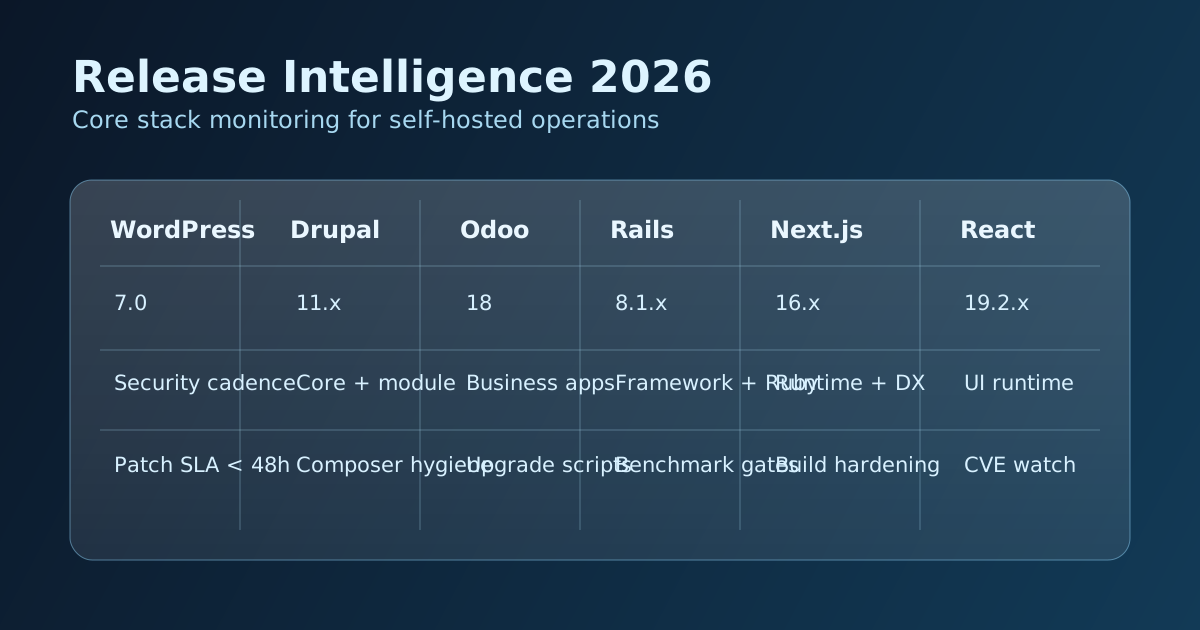
- WordPress: 7.0 line active
- Drupal: 11.x active line (with upcoming 11.4 beta stream visible)
- Odoo: 18 release notes live with broad module changes
- Rails: Guides currently on v8.1.3
- Next.js: 16.x line active while many organizations remain on 15.5
- React: 19.2 line active with important security updates in late 2025
Why This Matters to Operations
1. Security posture changes weekly, not quarterly
- New CVEs propagate through framework transitive dependencies quickly.
- Delayed patching creates compounding operational risk in internet-facing systems.
2. Performance gains now require release adoption
- New runtimes and build tool changes can improve CI/CD and response times.
- Staying on older minor lines leaves measurable speed and reliability gains unrealized.
3. Governance must become machine-readable
- Search engines and AI systems increasingly rely on structured, fresh, and source-cited content.
- Operational trust now depends on both code quality and knowledge quality.
90-Day Action Blueprint
Phase A: Baseline and segmentation (Weeks 1-2)
- Build a complete inventory of sites/apps by stack, version, and business criticality.
- Label workloads into: low-risk, customer-facing, revenue-critical, regulated.
- Define patch SLAs per tier (for example 48 hours for critical internet-facing surfaces).
Phase B: Controlled upgrade factory (Weeks 3-8)
- Add dependency scanning and lockfile drift alerts in CI.
- Introduce canary deployment gates with explicit rollback triggers.
- Enforce test matrix coverage for plugin/module/gem compatibility.
Phase C: Evidence and optimization (Weeks 9-12)
- Measure lead time to patch, change fail rate, and mean time to restore.
- Publish architecture and security runbooks with citation-backed release references.
- Add quarterly release governance reviews to avoid upgrade debt re-accumulation.
KPI Framework
- Patch lead time: target < 48 hours for critical paths
- Change fail rate: target < 10% for release-driven changes
- Rollback readiness: tested at least monthly
- Dependency freshness index: % of services on supported minor lines
Final Recommendation
Treat release management as a value program, not maintenance overhead. The winning operating model links each upgrade decision to one business outcome: reduced risk, lower incident cost, faster feature throughput, or improved customer performance.