Supply Chain Security for CMS and Framework Stacks
Security failures in 2026 are usually chain failures: vulnerable dependencies, weak build provenance, and uncontrolled runtime drift. A resilient posture needs defense-in-depth across the software lifecycle.
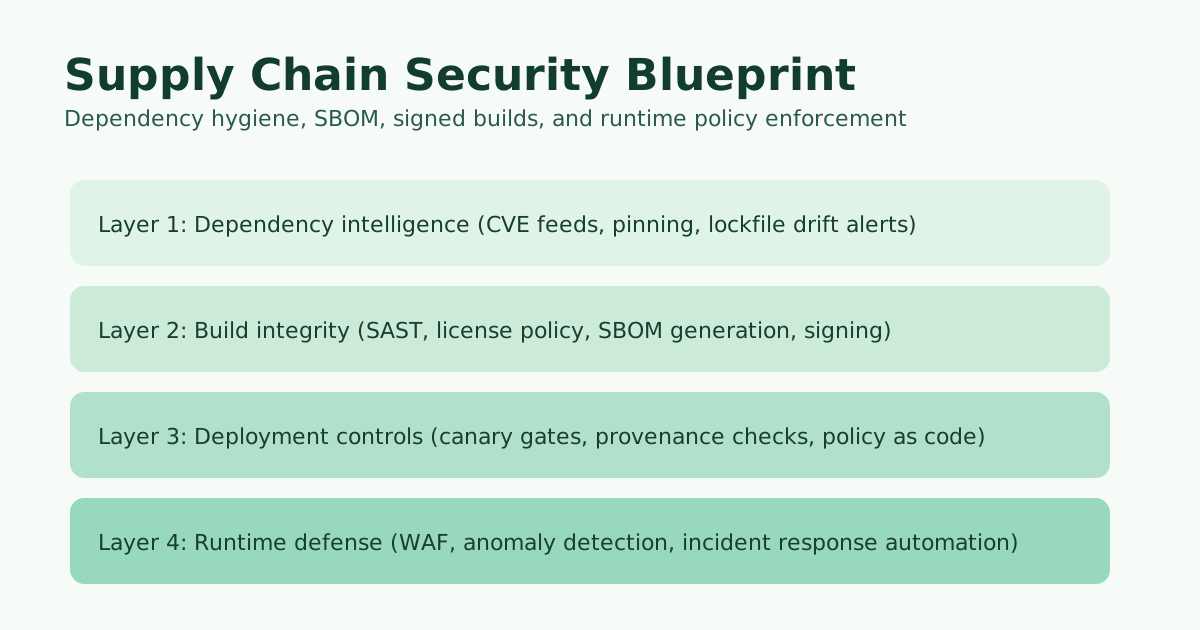
Layer 1: Dependency Intelligence
- Pin core framework and ecosystem packages
- Monitor advisories continuously
- Enforce update windows by service criticality
Layer 2: Build Integrity
- Run SAST and dependency checks in CI
- Generate and store SBOM artifacts
- Sign build outputs and retain provenance metadata
Layer 3: Deployment Controls
- Policy-as-code checks before promotion
- Canary gates linked to security and reliability metrics
- Automated rollback for integrity or performance regressions
Layer 4: Runtime Defense
- WAF and bot controls for public apps
- Runtime anomaly detection and alert routing
- Incident playbooks with ownership and escalation matrix
Platform-Specific Notes
- WordPress and Drupal: plugin/module ecosystem governance is as critical as core patching
- Odoo: broad module footprint requires strict extension inventory discipline
- Rails and Next.js: transitive dependency depth can mask exposure if lockfiles are stale
Board-Level Metrics
- Mean time to remediate critical CVEs
- % workloads with verified SBOM
- Unauthorized drift events per month
- Recovery time for high-severity incidents
Bottom Line
Security leaders should treat software supply chain controls as a reliability investment with direct financial impact, not only as compliance overhead.