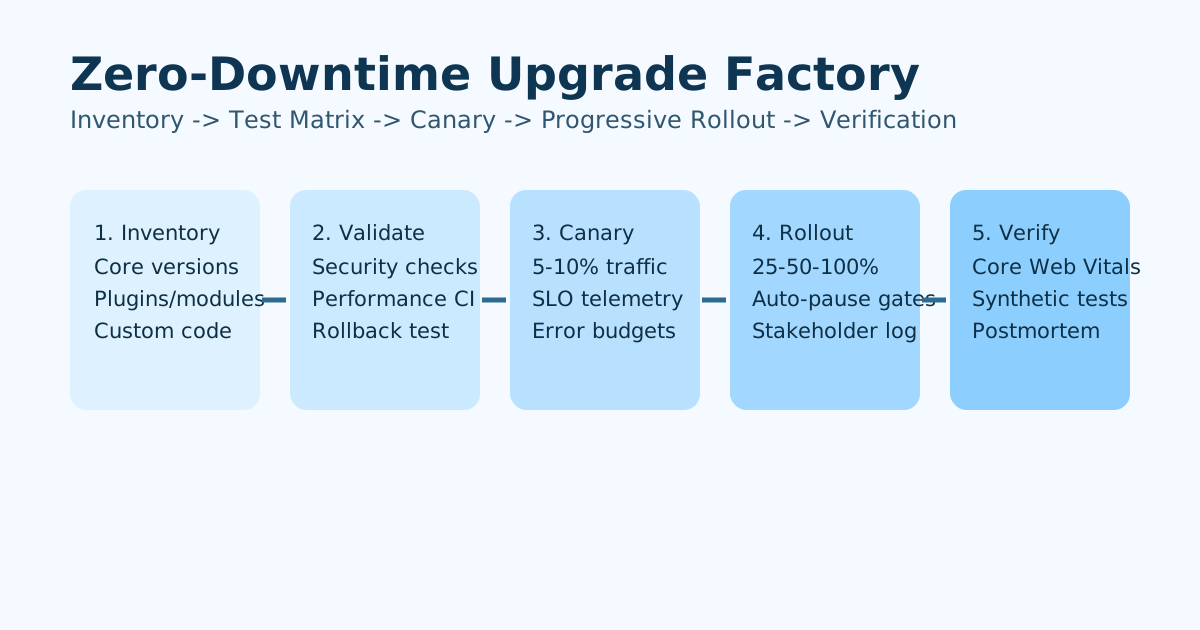
Zero-Downtime Upgrade Factory
Most upgrade programs fail because they are treated as one-off projects. High-performing teams run upgrades as a repeatable factory with clear stages, quality gates, and ownership.
Core Design Principle
Every release flows through the same path:
- Intake
- Risk scoring
- Compatibility testing
- Canary rollout
- Progressive deployment
- Post-release verification
Detailed Operating Steps
Step 1: Intake and triage
- Parse upstream release notes and advisories daily.
- Attach each change to an internal service map.
- Score risk on exploitability, blast radius, and reversibility.
Step 2: Compatibility matrix
- Validate plugins/modules/themes/gems and custom code interfaces.
- Run static and runtime checks under production-like load.
- Fail fast on authentication, payment, and integration paths.
Step 3: Canary and observability
- Start with 5% traffic and strict SLO thresholds.
- Watch p95 latency, error rates, queue backlogs, and conversion impact.
- Block expansion automatically on threshold breach.
Step 4: Progressive rollout and comms
- Promote to 25%, then 50%, then 100% with explicit approval gates.
- Keep an operation log with timestamped decisions and owners.
- Publish customer-facing maintenance notes where relevant.
Step 5: Post-release economics
- Compare before/after incident rates and infrastructure efficiency.
- Capture avoidable downtime costs prevented by proactive patching.
- Feed lessons into the next release cycle.
Recommended Tooling Layers
- CI: dependency scanning, policy checks, schema drift tests
- CD: canary strategy, automated rollback, audit trails
- Monitoring: synthetic tests, user journey probes, alert tuning
Anti-patterns to avoid
- Bundling too many unrelated upgrades in one change window
- Upgrading without rollback drills
- Treating release notes as optional reading
Executive Readout Template
- What changed
- Why now
- What risk reduced
- What business metric improved
This format keeps technical work tied to board-level decisions.